
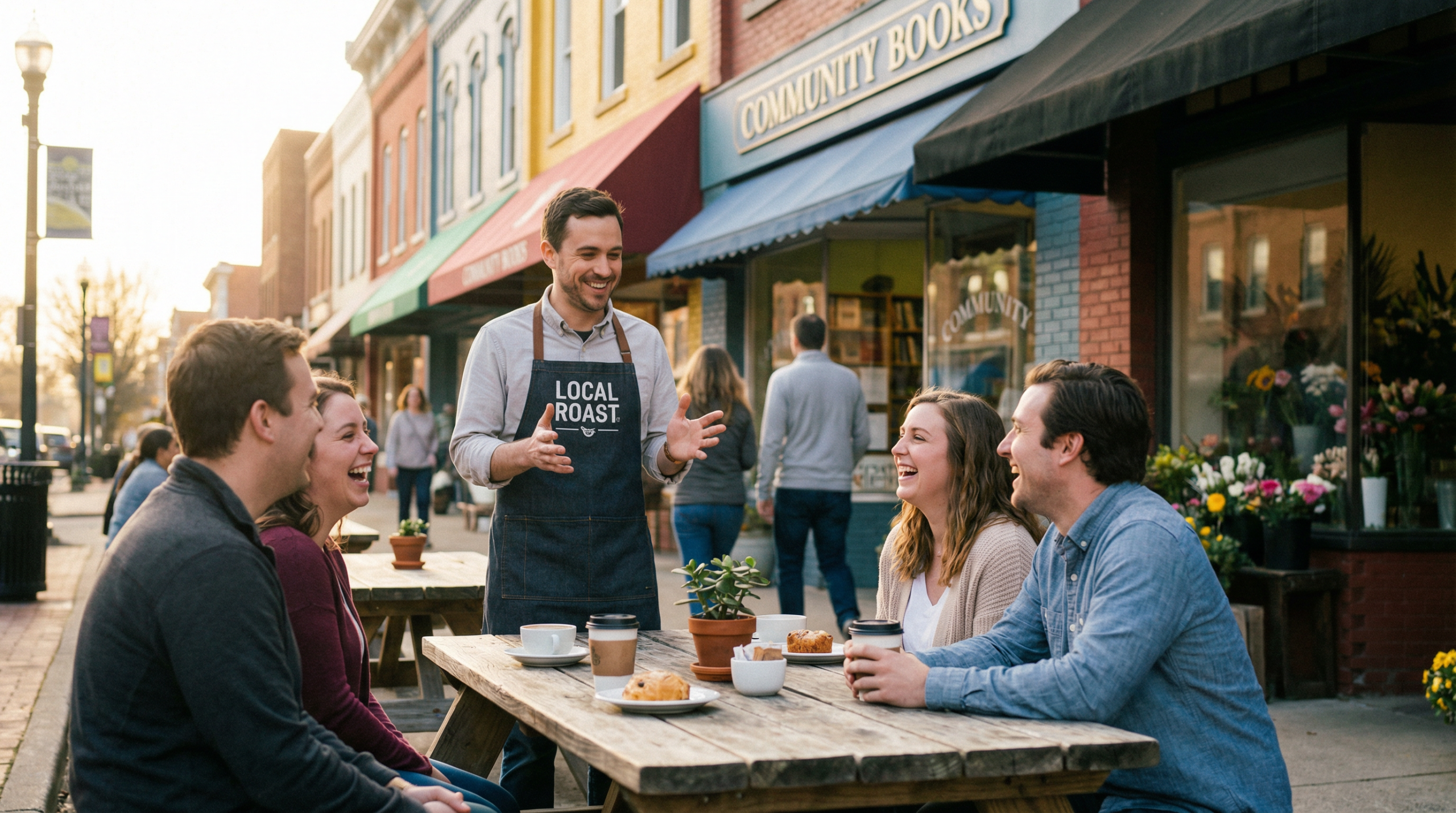
We thoroughly tested local SEO case studies to help you make an informed decision. Local businesses that dismiss social media as a tool “only for big brands” are leaving measurable revenue on the table. The evidence is clear: community engagement social media strategies and targeted local campaigns are consistently driving foot traffic, repeat customers, and brand loyalty for small and mid-sized businesses across virtually every industry.
Research published through Purdue University’s thesis collection confirms that social media marketing delivers tangible, trackable results for small businesses when strategy is applied with intention. The platforms aren’t just broadcast channels — they’re relationship engines.
What separates businesses that thrive on social from those that simply post and hope? Strategy, consistency, and a clear understanding of audience behavior. Local SEO case studies repeatedly demonstrate that businesses combining social media activity with location-based content see compounding benefits: stronger search visibility, higher engagement rates, and more referrals from within their immediate communities.
Businesses that treat social media as a community tool — not just an advertising channel — consistently outperform those that don’t.
Understanding which platforms, tactics, and content types work best for local audiences isn’t guesswork. It’s a discipline refined through real-world results. For businesses looking to sharpen their overall digital marketing approach, the following breakdown of platform-specific strategies offers exactly that starting point.
Overview of Social Media Platforms for Local Marketing
A smart local business social media strategy isn’t about being everywhere at once — it’s about matching the right platform to the right audience and objective. Each major network offers distinct advantages, and understanding those differences is the foundation of effective local marketing.
Platform characteristics worth knowing:
- Facebook remains the dominant platform for local discovery, with its robust Groups feature and hyperlocal advertising tools making it particularly effective for community engagement and event promotion
- Instagram prioritizes visual storytelling, giving businesses in food, retail, and hospitality a direct line to high-intent local consumers
- TikTok rewards authentic, unpolished content — a genuine advantage for smaller operators who can’t match the production budgets of larger competitors
- Nextdoor serves a niche but highly relevant audience, connecting businesses directly with neighborhood-level conversations
Beyond social channels, a Google Business Profile strategy operates as a critical complement to any platform mix. Posts, reviews, and Q&A activity on Google directly influence local search visibility — often before a potential customer ever visits a social profile.
What typically happens is that businesses achieving the strongest local results treat these channels as an integrated system rather than isolated tactics. According to research archived at Purdue University, consistent cross-platform activity correlates with measurable gains in brand recognition among local audiences.
Choosing the right combination, however, requires looking beyond theory. Real-world case studies reveal exactly how local businesses have turned platform selection into tangible community growth — which is precisely where the next section focuses.
Case Study Examples: Building Community Connections
Social media marketing for small businesses frequently succeeds not through polished ad campaigns, but through authentic community-building — and the evidence bears this out consistently.
Consider a common pattern among local retailers and restaurants: businesses that anchor their content strategy around neighborhood identity tend to outperform those pushing purely promotional material. A local bakery, for example, might gain more traction showcasing a longtime customer’s birthday cake than running a discount post. What typically happens is that community-centered content generates organic shares, extending local reach without additional ad spend.
Research compiled in HubSpot’s small business social media case studies reinforces this pattern: small businesses that consistently engage their local audience — responding to comments, tagging neighborhoods, and featuring real customers — build measurably stronger brand loyalty than those using broadcast-only approaches.
Local keyword optimization plays a supporting role here, too. When businesses include location-specific language in captions, bios, and hashtags, they improve discoverability among nearby users actively searching for relevant services.
Authentic, community-rooted content doesn’t just build goodwill — it functions as a repeatable, low-cost customer acquisition channel for local brands.
However, community-building isn’t a universal shortcut. Results vary by industry, platform, and posting consistency. The real differentiator tends to be execution — which is exactly where deliberate, platform-specific strategies make all the difference.
Strategies for Effective Social Media Marketing
The case studies covered earlier share a common thread: success rarely happens by accident. Behind every viral post or loyal community is a deliberate framework that combines content consistency, platform alignment, and audience insight — all reinforced by smart discovery tactics like small business SEO.
Content consistency is foundational. A common pattern is that businesses posting on a predictable schedule see stronger engagement than those posting sporadically, regardless of content quality. Algorithms reward regularity, and audiences learn to expect it.
A few core strategies consistently surface across high-performing local businesses:
- Hyperlocal storytelling — featuring neighborhood events, local partnerships, and community milestones builds genuine emotional connection
- User-generated content (UGC) — encouraging customers to share their own experiences extends organic reach without added spend
- Cross-platform reinforcement — repurposing content across channels while tailoring format to each platform maximizes efficiency
- SEO-integrated social profiles — optimizing bios, captions, and hashtags with location-based keywords bridges social visibility with search discoverability
That last point deserves emphasis. Social media and SEO are increasingly complementary disciplines — a well-optimized social presence can strengthen a business’s broader search footprint, particularly for geo-targeted queries.
According to Purdue University research on social media marketing, strategic consistency and audience targeting are among the most critical determinants of small business social media success.
Not every strategy works equally well on every platform, however — which raises an important question about how different approaches actually compare in practice.
Comparison: Social Media Marketing Strategies
Not all social media strategies deliver equal results for local businesses. Understanding which approaches drive local search visibility, engagement, and real revenue requires weighing the tradeoffs between several common tactics.
Content-led organic growth focuses on consistent posting, storytelling, and community interaction without paid amplification. This approach builds brand authenticity over time and tends to generate stronger audience loyalty. However, growth is slower, and results are harder to predict quarter over quarter.
Paid social advertising offers faster reach and precise geographic targeting — a meaningful advantage for businesses competing in defined service areas. On the other hand, ad costs scale with competition, and performance typically drops when budgets are paused.
Influencer and partnership campaigns leverage existing local audiences through trusted voices. What typically happens is that micro-influencer collaborations (under 10,000 followers) outperform celebrity-tier partnerships for local businesses, delivering more relevant reach at a fraction of the cost.
Platform-specific strategies demand careful selection. A restaurant may thrive on visually driven platforms, while a home services company gains more traction through community forum engagement or neighborhood-focused social networks.
| Strategy | Best For | Key Limitation |
|---|---|---|
| Organic content | Brand loyalty | Slow growth |
| Paid advertising | Fast local reach | Budget-dependent |
| Influencer campaigns | Targeted audiences | Variable ROI |
| Platform-specific | Niche engagement | Narrow reach |
Each strategy carries distinct tradeoffs — a reality that the Ignite Social Media case study library consistently reinforces across industries. The patterns across these approaches are worth examining side by side, which the following summary table makes considerably easier.
Summary Table: Social Media Strategies and Outcomes
The strategies and comparisons covered in previous sections reveal clear patterns across local business success stories. Consolidating these insights into a structured overview makes it easier to identify which tactics consistently drive measurable results — and which demand the most resources.
| Strategy | Primary Platform | Key Outcome | Best Fit For |
|---|---|---|---|
| Community engagement campaigns | Increased foot traffic, local brand loyalty | Retail, restaurants | |
| Behind-the-scenes content | Higher follower retention, trust building | Service businesses | |
| User-generated content (UGC) | Instagram / Facebook | Reduced content costs, authentic social proof | Any local business |
| Hyperlocal hashtag targeting | Improved local discoverability | Boutiques, cafes | |
| Short-form video storytelling | TikTok / Reels | Rapid audience growth, viral potential | Food, fitness, retail |
| Customer review amplification | Facebook / Google | Strengthened reputation, increased conversions | All sectors |
Research compiled in Social Media Marketing Case Studies by Ignite Social Media confirms that consistency and platform alignment — matching content format to audience behavior — are the strongest predictors of positive outcomes.
For those conducting deeper research, a social media marketing case studies PDF from HubSpot’s Small Business Case Studies resource offers downloadable documentation useful for internal presentations and planning sessions.
The most effective local strategies share one trait: they prioritize authentic community connection over broad reach. However, no strategy is without its trade-offs — a reality worth examining carefully before committing resources.
Limitations and Considerations in Social Media Marketing
The case studies and strategy comparisons explored throughout this article reveal genuine success patterns — but responsible analysis demands equal attention to what can go wrong. Social media marketing for local businesses carries real constraints that practitioners rarely highlight in highlight reels.
Resource intensity is the most consistent challenge. Maintaining an active, high-quality presence across multiple platforms demands time, creative output, and often budget that small operations simply don’t have. A common pattern is that businesses launch campaigns with strong momentum, then see engagement drop sharply once initial enthusiasm fades or staffing changes occur.
Attribution remains genuinely difficult. Connecting social media activity directly to in-store visits or revenue requires tracking infrastructure that many small businesses haven’t built. Without clear measurement, it’s easy to over- or undervalue specific channels.
Platform algorithm changes introduce unpredictability. What performs well today may become far less effective within months, requiring constant strategy adjustment. Organic reach on major platforms has declined significantly over the past several years, placing pressure on paid amplification budgets.
Audience mismatch is another underappreciated risk — targeting the wrong demographic, even with strong creative, produces little measurable return.
Researchers at Purdue University noted in a peer-reviewed case study that small businesses often underestimate the ongoing commitment social media requires. For those seeking structured frameworks, a social media marketing small business PDF resource can help establish realistic benchmarks before launching campaigns.
These limitations don’t diminish the opportunity — they sharpen it. Understanding where strategies commonly fail positions businesses to ask better questions, many of which the next section addresses directly.
Frequently Asked Questions About Social Media Marketing
What platforms work best for local businesses?
Platform selection depends heavily on your target demographic and industry. Restaurants and retail shops typically see strong returns from visually driven platforms, while service-based businesses — contractors, consultants, attorneys — often benefit more from community-focused networks. In practice, most successful local businesses maintain an active presence on two platforms rather than spreading resources thin across five.
How long before social media marketing produces measurable results?
A common pattern is that local businesses begin seeing meaningful engagement improvements within 60 to 90 days of consistent posting, but tangible revenue impact often takes four to six months. Organic growth is slower; paid campaigns can accelerate timelines considerably.
Should social media be used alongside Google My Business optimization?
Absolutely — and this pairing is frequently overlooked. Google My Business optimization strengthens local search visibility while social media builds community and brand awareness. The two channels reinforce each other: social content drives profile visits, and a polished business profile converts that traffic into customers. Treating them as isolated channels leaves significant opportunity unrealized.
How much should a small business budget for social media?
Research from HubSpot’s Small Business Social Media guide consistently points to consistency over spend — even modest, well-targeted budgets outperform larger inconsistent investments.
The patterns surfaced through these questions point toward several actionable principles worth consolidating — which the following takeaways capture directly.
Key Local SEO Case Studies Takeaways
The social media marketing case studies examined throughout this article point to consistent, actionable patterns that local businesses can apply regardless of industry or budget.
What the evidence confirms:
- Consistency outperforms creativity alone. Regular posting schedules and cohesive brand voice build audience trust more reliably than one-off viral attempts.
- Platform fit matters. Matching content format to platform behavior — video on Instagram, community dialogue on Facebook, visual discovery on Pinterest — determines whether effort translates to engagement.
- Local citations NAP consistency (Name, Address, Phone) reinforces social media efforts by ensuring that audiences who discover a business through social channels find accurate, matching information everywhere they search.
- Community-first content converts. Businesses that position themselves as neighborhood participants rather than advertisers consistently report stronger long-term loyalty.
- Measurement closes the loop. Tracking even basic metrics — reach, saves, direct message volume — allows businesses to refine strategy rather than guess.
As Ignite Social Media’s case study portfolio illustrates, sustained results stem from strategic discipline, not just good content instincts.
The bottom line: Social media rewards local businesses that show up authentically, communicate consistently, and treat every platform as a two-way conversation. Start with one platform, master it, then expand. The audience is already there — the next step is showing up for them.