Frequent flickers, random breaker trips, a fuse box instead of breakers – these are all signs that it is time to consider a circuit breaker installation. This is not a renovation project, it is a safety upgrade that safeguards your house, family and appliances. At First Electric, we have assisted many Santa Fe Springs, CA residents and businesses in getting safe, code-compliant electrical systems. If you are installing a new circuit breaker panel or replacing an old one, this guide will help put your mind at ease so you can reach out to an electrician.
In this article, we’ll cover how to install a circuit breaker from collecting the necessary equipment to connecting the breaker to the house.
Why Circuit Breaker Installation Is So Important for Your Home
The circuit breaker is the main device for your home’s electricity. It’s there to regulate the flow of electricity to each part of your home and it turns off your electrical system if something goes amiss. If you don’t have a functioning breaker, your home lacks a short circuit protection and an overload protection device. So a bad wiring connection could very easily lead to a fire or damaged appliances. Many Santa Fe Springs homes still have old fuse boxes that can’t keep up with today’s electrical needs. Replacing your fuse box with a circuit breaker panel is a great investment for your home. An experienced electrician will also ensure that you are in compliance with the electrical code, keeping you safe and legal.
Get the Right Tools and Materials Before You Start
Preparation is key to a successful job. Before you start doing any work inside your electrical panel, you’ll need the proper tools.
Here’s what an electrician typically carries for installing a circuit breaker:
The most important is a voltage tester, or non-contact voltage detector. It lets you know if there is electricity flowing before you begin working on the wires. Otherwise, you are guessing and guessing around electricity is dangerous. You will also need flathead and Phillips screwdrivers, needle-nose pliers, wire strippers and a flashlight or headlamp. It can be dark in a load center, and you need to be able to see. In terms of materials, you need the right new circuit breaker installation in Santa Fe Springs, CA. This is a common error that can result in tripping or even damage to your panel. It’s important to verify the amperage of the breaker you are installing or replacing. The average household circuits are 15-amp breakers or 20-amp breakers. Some larger appliances, such as dryers or HVAC systems, may require 30-amp or 50-amp double-pole breakers.
Turn Off the Power and Test the Area Before Doing Anything
This is the most important step when working with any electrical system. The first thing you do is turn off the power to the area you are working in. Locate your main breaker switch and turn it to OFF. This will turn off power to the whole panel. You can sometimes just turn off the individual circuit breaker but turning the main off is always best. Once you have switched it off, test the wires in the panel with your voltage tester to be sure the power is shut off. Never rely on the switch alone to indicate that the power is off. They cost a buck and might save your life. It’s also a good idea to perform a visual safety check of your panel. Keep an eye out for burnt areas, melted plastic or rust. If you notice anything, have a qualified electrician take a look before you proceed.
Remove the Panel Cover Carefully
Before working on your circuit breaker, make sure the power is turned off. Take off the cover of the power distribution board, which is held in place with screws. Place the cover out of the way. You don’t want it accidentally falling on your tools or obstructing your view. Take a look inside the power distribution board. There will be breakers on each side and wires going to them. The large wires on top that are connected to the main breaker are the high voltage wires from the power company and these will NOT be interrupted by turning off the main breaker.
Here is where some DIYers call in an electrician. These high voltage wires are always live, even with the main breaker shut off. An electrician knows how to safely handle this. If you are not confident, now is the time to seek advice.
Select the Correct Slot for the New Circuit Breaker
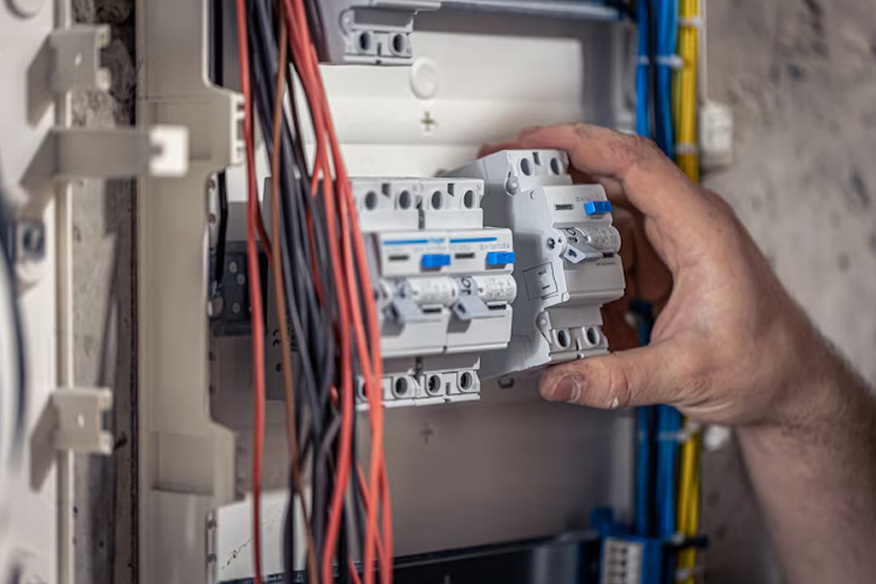
All circuit breaker panels contain a number of slots. Some are already in use. Some are empty and available. To add a new breaker, you must find an open slot that fits the breaker you need to install. A single-pole breaker is a single slot. A double-pole breaker takes up two slots. If you have no empty slots, you can either: You could swap in a tandem breaker if your panel can accept one, or you may need to install a subpanel to increase the number of circuits. This is often the case with old homes that weren’t designed for the current electrical demands.
Be sure and check your panel’s manufacturer and model number before you replace the breaker. Not all breakers fit all panels. This will not be code compliant and may be a fire risk.
How to Install a Circuit Breaker Step by Step
Now comes the actual installation. This is when it all comes together.
First, position the new breaker on an angle and clip one end to the bus bar in the panel. Then push the other side down until you hear or feel a click. The breaker should feel solid and fit flush with the other breakers. If it does not click in and is not firm, it may not be the right breaker for your panel. Do not force it. Installing the wrong breaker is a major source of damage and electrical inspection failures. This is why Circuit Breaker Installation Services must be done correctly and carefully. Now that the breaker is in place, it’s time to wire it. But before you do, test again with your voltage tester. Better safe than sorry. If you are a homeowner looking to do a makeover, new smart circuit breakers are now available that allow you to control and monitor the status of your circuits via your smartphone. They are an excellent addition when you are rewiring your house with a new electrical panel and increase home electrical safety.
How to Wire a Circuit Breaker Correctly
Most errors occur in wiring, so be careful. Improper wiring can lead to short circuits, breakers, or even fires.
The wires in a circuit should be a black (hot) wire, a white (neutral) wire and a bare copper or green (ground) wire. They each have their own place.The hot wire (black) goes to the terminal screw on the breaker. Use your wire strippers to remove about three-quarters of an inch of insulation from the end of the wire, and then insert it into the terminal and tighten the screw. A bad connection is one of the most common causes of breaker issues and wiring system malfunctions. The white (neutral) wire connects to the neutral bus bar and the silver bar on the side of the breaker panel that all the other white wires connect to. The bare copper wire goes to the grounding system bar, which could be the same bar or a different bar on your panel. Make sure to tighten all the connections. Pull on the wires to ensure they are secure.
After wiring the new breaker, put the cover back on the electric panel and switch the main breaker back on, and finally the new breaker. Try the breaker to put a new circuit to the test.
When You Should Always Call a Licensed Electrician
If you have an old panel, more than 25 years old, you need a panel upgrade. It probably needs a new panel or electrical panel upgrade to code. If you are installing more circuits for large appliances, a home office, or an electric vehicle charging station, a professional will ensure the load center is large enough and your electrical system will be able to support the additional load. If you are a commercial property owner in Santa Fe Springs, commercial circuit breaker installation is even more important. A commercial electrical contractor will have the expertise.
And if there is an emergency such as a breaker that won’t reset, burning odors or loss of power – don’t delay. There are emergency electrical services for these sorts of problems.
Conclusion
Circuit breaker installation is not just a technical job it is a safety job. Every step, from turning off the main breaker switch to wiring the circuit correctly, must be done with care and precision. Understanding the process helps you know what to expect and ask the right questions. But when it comes to your home or business in Santa Fe Springs, CA, working with professionals gives you peace of mind that the job is done right the first time. First Electric provides residential and commercial circuit breaker installation services that are safe, code-compliant, and built to last. From simple breaker replacements to full electrical panel upgrades and subpanel installation, our team handles it all.
Frequently Asked Questions
How much does circuit breaker installation cost in Santa Fe Springs, CA?
The cost of circuit breaker installation depends on the type of breaker, the condition of your panel, and whether any additional electrical wiring work is needed. A single breaker replacement is typically more affordable, while a full electrical panel upgrade costs more. It is best to get a quote from a licensed electrician near Santa Fe Springs, CA for an accurate estimate.
What are the signs you need a new circuit breaker panel?
Common signs include breakers that trip frequently, a burning smell near the panel, flickering lights, an old fuse box, or a panel that feels warm to the touch. If you notice any of these, it is time to schedule an electrical safety inspection right away.
Can I do circuit breaker installation myself, or do I need a licensed electrician?
While minor tasks can be DIY, circuit breaker installation involves serious safety risks. Hiring a licensed electrician ensures the work meets electrical code compliance, protects your home, and keeps your warranty and insurance valid.
How long does a circuit breaker installation take?
A single breaker replacement usually takes one to two hours. A full breaker panel installation or electrical panel upgrade can take a full day depending on the scope of work and the condition of your existing electrical wiring system.
What is the difference between a circuit breaker and a fuse box?
A fuse box uses fuses that burn out and must be replaced each time. A circuit breaker panel uses breakers that simply trip and can be reset. Fuse box replacement with a modern circuit breaker panel is recommended for safety, efficiency, and electrical code compliance.
Do you offer same-day circuit breaker installation in Santa Fe Springs?
Yes, many electrical issues cannot wait. Emergency electrical services and same-day circuit breaker installation are available for urgent situations in Santa Fe Springs, CA and the surrounding areas.