
The electrical panel is the heart of your home’s electrical system and it’s not something most homeowners consider unless it’s broken or causing problems. If you have constantly tripping breakers, flickering lights that dim when your air conditioning turns on, or if you’re remodeling or adding on to your home, an electrical panel upgrade isn’t just a good idea, it might be the only safe option.
In this article from Rock Hill Electrician, we’ll provide all the information you need: when it’s time to upgrade, how much it will cost, how long it will take and how to avoid paying too much or getting short-changed.
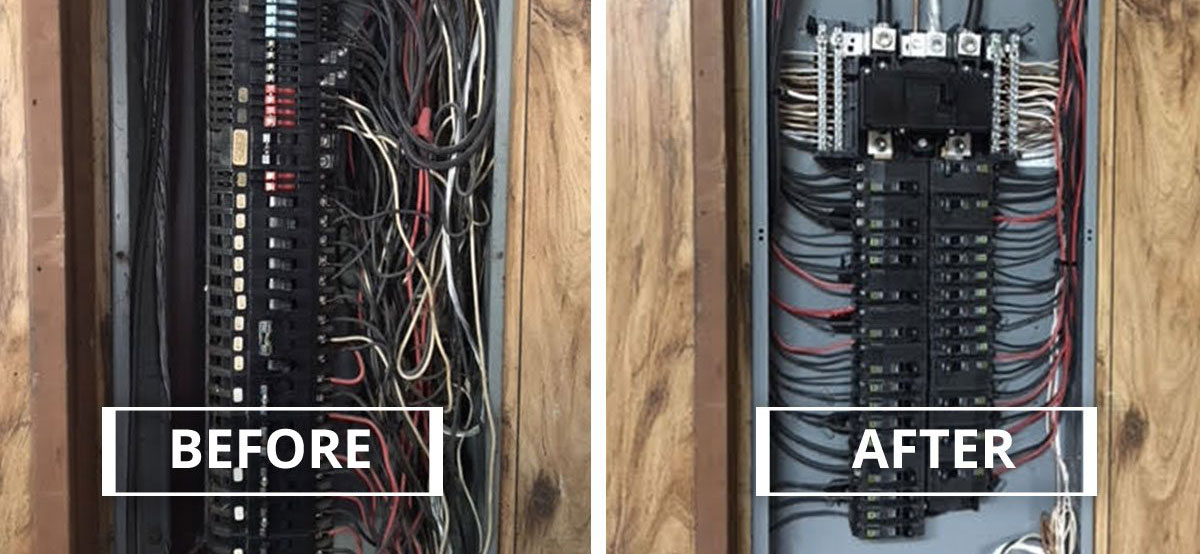
What Is an Electrical Panel Upgrade and Why Does It Matter?
The electrical panel also known as a breaker box, load center or service panel is what delivers power from the utility company to your house and divides it into circuits. All outlets, lights, appliances and HVAC systems are connected to a circuit that is fed from the panel.
Older homes have 60-amp or 100-amp panels. This was sufficient in the 1960s when the main electrical load was a fridge and some lights. Nowadays, with electric cars, smart appliances, home offices and central air, homes require more power.
Upgrading your electrical panel involves replacing an old, small one with a new, larger, safer one usually from 100 amps to 200 amps, or 400 amps for very large homes. It’s not just about power. It’s about safety, code conformity, and ensuring your home can cope with life.
The Difference Between a Panel Upgrade and a Panel Replacement
They are often used interchangeably, but are not the same.
A panel replacement is when you replace a worn, damaged or recalled panel (the same size panel). A panel upgrade is when you increase the amperage which gives you more circuits, capacity and power.
Sometimes you need both. If you have a 100-amp panel that’s also 40 years old with outdated wiring, it’s best to replace and upgrade your panel simultaneously.
What Happens If You Don’t Upgrade?
If you have a full or failing electrical panel, don’t ignore it – it’s hazardous. According to the U.S. Fire Administration, electrical fires are the cause of about 51,000 residential fires annually, often resulting from outdated wiring and overloaded panels.
When a panel is too small, breakers are overloaded. As a result, connections become loose, breakers don’t trip, and heat starts to accumulate inside the box. And that’s how fires begin.
Warning Signs Your Electrical Panel Needs an Upgrade
Most panels don’t announce their failure dramatically. They give off subtle signals that are easy to miss until they aren’t.
Frequent Breaker Trips
It’s normal for a breaker to trip once in a while. But if your breaker trips every time you use the microwave and the toaster, it’s a clear sign you may need an electrical panel upgrade in York, SC. This usually means the circuit is overloaded and your current panel is undersized for your home’s power needs.
If you’re tripping the same breaker more than once a month, it’s time to call an electrician to assess your electrical load and determine whether an electrical panel upgrade in York, SC is the safest solution.
Dimming Lights
When your lights flicker every time the washing machine turns on, it’s a voltage drop – a sure sign your panel can’t provide even power to all circuits. Or it can be a sign of loose connections in the panel itself – a fire risk.
Burning Smell or Scorch Marks Near the Panel
This is the red-flag sign. This is a sign of heat build-up. Burn marks around the breakers or on the face of the panel door means arcing has already taken place. Don’t ignore it; call an electrician now.
Your Home Still Has a Fuse Box
Fuse boxes are outdated and used to power homes before the invention of circuit breakers. Fuse boxes are a huge no-no in the eyes of most insurance agencies, or will be charged much higher rates. If you have fuses, it’s time to replace them with a modern breaker panel
You’re Adding High-Draw Appliances or an EV Charger
An EV charger needs a dedicated 240V, 50Amp circuit. A hot tub requires a dedicated 60-amp circuit. An air-conditioner can consume 30-50 amps. And if your panel is already close to full, any of these without an upgrade is a recipe for disaster.
How Much Does an Electrical Panel Upgrade Cost?
Price is always the first question, and it’s reasonable to expect a definitive answer. The short one: it depends on your location, the panel you’re upgrading and how extensive the upgrade needs to be.
Typical Cost Ranges by Scope
| Upgrade Type | Average Cost Range |
| 100A to 200A upgrade | $1,300 – $3,000 |
| 200A panel replacement (same amperage) | $1,000 – $2,500 |
| 200A to 400A upgrade | $2,000 – $4,000+ |
| Subpanel installation (100A) | $500 – $1,500 |
| Recalled panel replacement (e.g., Federal Pacific) | $1,500 – $4,000 |
These figures include labor, materials, and permit fees. They don’t account for additional work like replacing outdated wiring, adding AFCI/GFCI breakers to bring the home up to current NEC code, or upgrading the meter base all of which add to the total.
What Drives the Price Up?
A few factors push costs toward the higher end:
Location
Labor rates in major metro areas can be 30–50% higher than in rural markets.
Panel brand
Square D, Eaton, and Siemens panels are industry standards. Expect to pay a bit more for a quality load center. It’s worth it.
Permit and inspection fees
Most jurisdictions require a permit for panel work. This typically runs $50–$300 but varies by municipality.
Utility coordination
If your upgrade requires the utility company to disconnect and reconnect the service line, there may be scheduling delays and additional fees.
Is It Worth the Investment?
Almost always, yes. A 200-amp panel upgrade typically adds $1,000–$3,000 in resale value roughly dollar-for-dollar with the cost. More importantly, it expands what your home can do, lowers your insurance risk, and eliminates the stress of managing an overloaded system.
Real estate agents in most markets will tell you: a home with an outdated 60-amp panel or a Federal Pacific Stab-Lok box is a harder sell. Buyers notice it. Inspectors flag it. Lenders sometimes won’t finance it.
The Electrical Panel Upgrade Process: Step by Step
Knowing what goes on during an upgrade can help you get ready, ask the questions you need answered, and identify the potential corners that electricians might cut.
Step 1: Load Calculation and Assessment
A professional electrician will conduct a load calculation – an analysis of each electrical circuit and power demand in your home. This lets you know how big a panel you really need, not how big it sounds.
There’s a formula for load calculations in the NEC (National Electrical Code) in Article 220 for residential buildings. An electrician who does not follow this process and simply recommends a 200-amp panel is not doing his or her job.
Step 2: Pulling the Permit
This is a no-brainer. No matter where you live in the United States, a permit is required to work on an electrical panel. If someone promises to “save you money” by “skipping the permit,” don’t hire them. Electrical work that isn’t permitted can invalidate your home owner’s insurance policy, expose you to liability as a homeowner and, more importantly, is never checked for safety.
Permits range in price from $50 to $300 per city or county.
Step 3: Utility Disconnect
Prior to the main panel work, there is a required disconnect by the Utility company at the meter. This is a safety requirement. In most jurisdictions, the electrician will schedule this, and it can take a half day to a day for the lineman to arrive.
Expect to be without power four to eight hours on the day of installation.
Step 4: Panel Installation
The old panel comes out. The new one goes in. Your electrician moves each of your circuit breakers into their corresponding position in the new panel, installs the main breaker and grounds the system. If the upgrade requires AFCI (arc-fault circuit interrupter) or GFCI breakers (as is the case in most upgrades) they are installed now.
This process may take three to six hours for a typical 200-amp upgrade.
Step 5: Inspection
Once the upgrade is complete, a city or county electric inspector will inspect the work. This is where you get quality assurance. An electrician who doesn’t want to be inspected is suspicious. If yours is squeamish, watch out.
When it passes, the power company restores service and you’re done..
Choosing the Right Electrician in York, SC
The quality of any electrical work is only as good as the person doing it. When it comes to Electrical panel replacement services in York, SC, cutting corners can create problems that don’t show up for years and when they do, they can be catastrophic..
What to Look for in a Panel Upgrade Contractor
Licensing
In most states, panel work must be done by a licensed master electrician or an electrical contractor. Ask for their license number and verify it with your state licensing board.
Insurance
General liability and workers’ compensation are non-negotiable. If someone gets hurt on your property and they’re not insured, that becomes your problem.
Permit history
Ask directly: “Do you pull permits for panel work?” If they hesitate, find someone else.
References
A contractor with a solid track record of panel upgrades in your area should be able to provide at least two or three references without hesitation.
Should You Get Multiple Quotes?
Yes, get at least three quotes. Not because the cheapest is best, but because comparing quotes reveals what each contractor is actually proposing. If one quote is dramatically lower than the others, find out why. Maybe they’re not including the permit. They’re planning to reuse your old breakers. Maybe they’re skipping the load calculation.
The goal isn’t to find the lowest price. It’s to understand exactly what you’re getting.
Electrical Panel Upgrades and Home Insurance
Your insurance company cares about your electrical panel more than you might think. Many insurers refuse to write policies on homes with fuse boxes, Federal Pacific panels, or panels under 100 amps. Others will cover them but charge significantly higher premiums.
After a panel upgrade, notify your insurance provider. In many cases, homeowners see a reduction in their annual premium which helps offset the cost of the upgrade over time. Get it in writing.
Making the Most of Your Panel Upgrade
An upgrade is the perfect time to future-proof your home’s electrical system. Once the panel is open and the permit is pulled, adding circuits is relatively inexpensive compared to doing it as a separate job later.
Consider adding:
- Dedicated circuits for a home office, workshop, or kitchen appliances
- A 240V outlet in the garage for EV charging
- Whole-home surge protection installed at the panel a single device that protects every appliance in your home from voltage spikes
- AFCI breakers throughout the home if your older panel didn’t have them
Whole-home surge protectors, in particular, are an underrated addition. A single lightning strike or utility surge can destroy thousands of dollars of electronics.
Conclusion
An electrical panel upgrade isn’t glamorous. It doesn’t add a beautiful kitchen or a new bathroom. But it makes everything else in your home work better, safer, and with more capacity for the future.
If your home is over 25 years old and you’ve never had the panel evaluated, start there. Schedule an assessment with a licensed electrician not to commit to anything, just to understand where you stand. If you’re already experiencing flickering lights, frequent trips, or burning smells, treat this as urgent.
The cost of an upgrade is real. The cost of a house fire is catastrophic. That math isn’t complicated.
FAQ’s
How do I know if my panel needs to be upgraded or just repaired?
If the panel is undersized for your current usage, a repair won’t solve the problem you need an upgrade. If the panel is the right size but has a damaged breaker or loose connection, a repair may be sufficient. An electrician’s assessment will clarify which situation you’re in.
Does a panel upgrade increase home value?
Yes. Most real estate professionals and appraisers treat a 200-amp panel upgrade as a value-add, typically returning close to the cost of the upgrade in resale value plus making the home easier to sell and insure.
How often should an electrical panel be replaced?
A quality panel installed correctly can last 25–40 years. However, if you have a recalled brand (Federal Pacific, Zinsco), or the panel shows signs of physical damage, corrosion, or overheating, age is less relevant it should be replaced now.
Is a 200-amp panel enough for an EV charger?
In most cases, yes a 200-amp panel can support a Level 2 EV charger on a dedicated 50-amp circuit, provided your overall load isn’t already maxed out. Your electrician’s load calculation will confirm this.
Can I add a subpanel instead of upgrading the main panel?
A subpanel adds circuit capacity in a specific area (like a detached garage or workshop) but doesn’t increase your home’s total amperage. If the main panel is already at its service limit, a subpanel won’t solve the underlying capacity problem.
What is the NEC and does it affect my upgrade?
The National Electrical Code (NEC), published by the National Fire Protection Association (NFPA), sets the baseline safety standards for electrical installations in the U.S. Most states adopt the NEC with minor modifications. When your electrician installs AFCI or GFCI breakers during your upgrade, they’re bringing your home into compliance with NEC requirements and that’s a good thing.
Will my homeowner’s insurance go down after a panel upgrade?
Potentially, yes. Notify your insurer after the upgrade is complete and inspected. Many carriers offer reduced premiums for homes with updated electrical systems, particularly if you’re replacing a recalled panel brand.